
Non-Owner DUI Insurance Carriers — Louisiana
Free to compare
Non-Owner SR-22 After Louisiana DUI
Your Louisiana license was suspended after a DUI conviction. The OMV requires SR-22 proof of financial responsibility for three years before reinstatement. You sold your car during the suspension, or you never owned one. Now the requirement makes no sense: the state demands auto insurance, but you have no vehicle to insure.
Non-owner auto insurance exists for exactly this situation. It satisfies Louisiana's SR-22 filing requirement without insuring a specific vehicle. The policy covers you as a driver when you borrow or rent a car, and the carrier files SR-22 electronically with the OMV. The structural problem is that most carriers writing non-owner policies reject DUI applicants outright or push them to non-standard subsidiaries you cannot find on their main websites.
“Most carriers writing non-owner policies reject DUI applicants outright or push them to non-standard subsidiaries you cannot find on their main websites.”

See Who Insures Louisiana Drivers After a DUI
Get My Louisiana DUI Insurance Quote3 years
Louisiana SR-22 Period After DUI
Louisiana requires SR-22 filing for three years after a DUI conviction, measured from the conviction date. The filing must remain continuous — a lapse triggers OMV notification and immediate suspension reinstatement.
La. R.S. 32:415.1 and 32:667
Why Standard Carriers Reject Non-Owner DUI Applications
Preferred-tier carriers like State Farm and USAA write non-owner policies, but their underwriting algorithms flag DUI convictions as automatic declinations for non-owner applications. The actuarial logic: a driver with no vehicle who also has a DUI is statistically more likely to borrow cars frequently and file claims at higher rates than a clean-record non-owner applicant.
Standard-tier carriers like Geico and Progressive write non-owner SR-22 policies and accept DUI applicants, but they route you to a higher rate class than their advertised non-owner quotes. The rate increase is not published on quote pages. You discover it only after entering your violation history during the application.
Non-standard carriers like Bristol West, Direct Auto, The General, and National General are explicitly built to write DUI and SR-22 business. They accept non-owner DUI applications without declination, but their base rates start higher than standard-tier carriers because their entire book consists of high-risk drivers. The tradeoff: guaranteed acceptance versus higher premium floor.
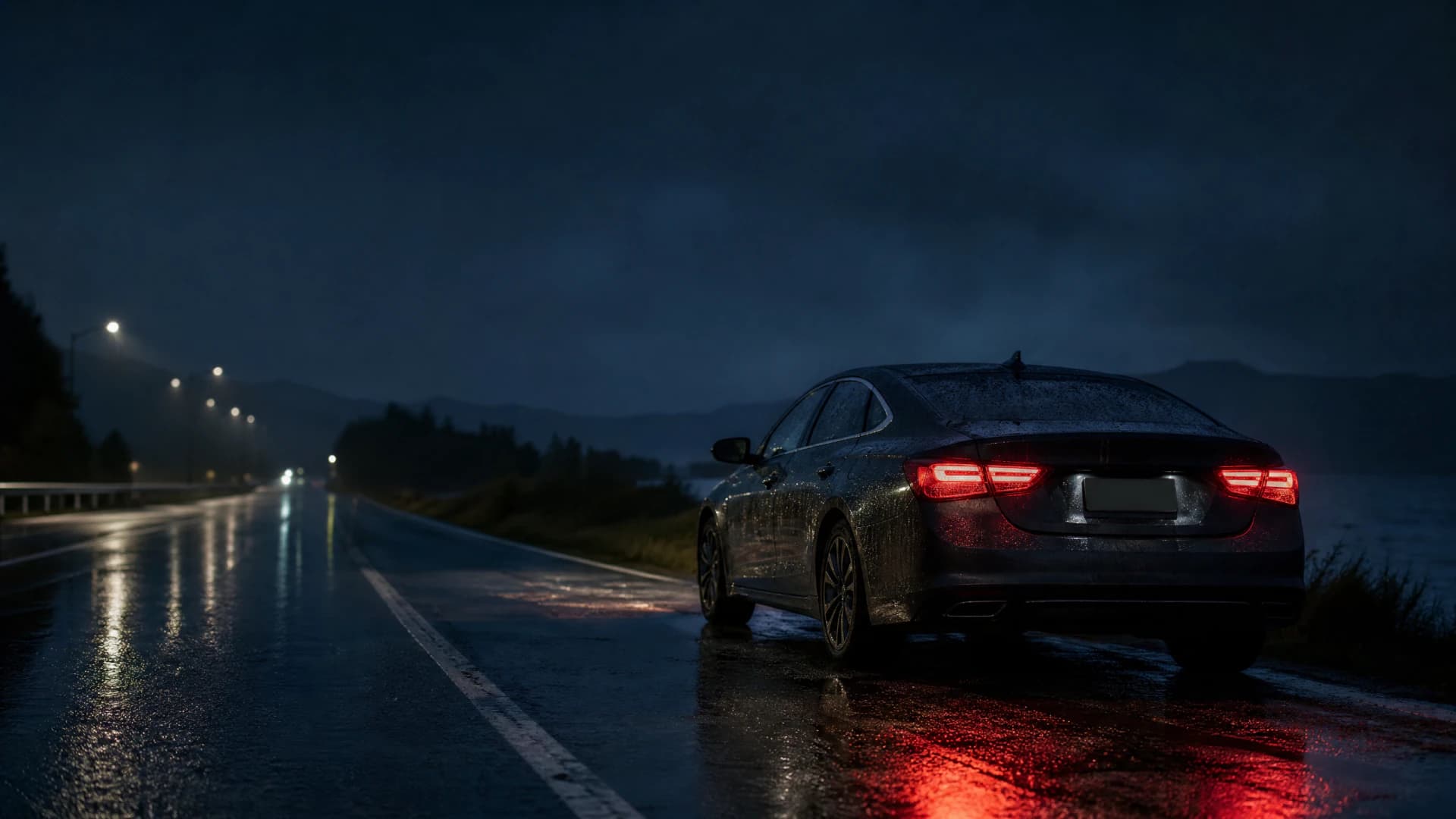
Most Louisiana DUI drivers applying for non-owner SR-22 discover their application was rejected only after waiting days for a quote callback that never comes.
What Non-Owner SR-22 Actually Covers
Non-owner auto insurance provides liability coverage when you drive a car you do not own. It does not cover damage to the vehicle you are driving — that responsibility falls to the vehicle owner's collision and comprehensive policy, or to you personally if the owner has no coverage. Non-owner policies satisfy Louisiana's minimum liability requirements: $15,000 bodily injury per person, $30,000 bodily injury per accident, and $25,000 property damage.
The SR-22 endorsement is a certification the carrier files electronically with the Louisiana OMV confirming you hold continuous liability coverage. The endorsement itself does not change what the policy covers. It is purely an OMV reporting mechanism. If your policy lapses or cancels, the carrier notifies the OMV within 10 days and your license is re-suspended immediately.
Non-owner policies exclude coverage when you drive a vehicle registered in your household or a vehicle you use regularly but do not own. If you live with someone who owns a car and allows you to drive it regularly, the OMV expects you to be added as a named driver on their policy instead of carrying a separate non-owner policy. Carriers will deny claims if they discover regular use of a household vehicle under a non-owner policy.
$60
Louisiana License Reinstatement Fee
After completing your suspension period and maintaining SR-22 filing for the required three years, Louisiana OMV charges a $60 base reinstatement fee to restore your license. Additional fees may apply depending on suspension type and whether a restricted license was issued during suspension.
Louisiana R.S. 32:415.1
Restricted License and SR-22 During Suspension
Louisiana allows restricted license eligibility after completing a mandatory hard suspension period for DUI. First-offense DUI convictions require a 90-day hard suspension before restricted license eligibility begins. The restricted license permits driving for employment, school, medical appointments, and other OMV-approved necessary purposes. An ignition interlock device is required as a condition of the restricted license for all DUI-related suspensions.
SR-22 filing is required before the OMV will issue the restricted license. You apply for the restricted license through OMV after the hard suspension period ends, submit proof of SR-22 filing from your carrier, and pay applicable fees. The OMV processes restricted license applications through its offices — not online. Most Louisiana DUI drivers discover they need to secure non-owner SR-22 filing before they can even begin the restricted license application.
The ignition interlock device requirement layers on top of the non-owner policy. The device is installed in any vehicle you drive regularly, but non-owner policies do not cover interlock installation or monitoring costs. If you are driving a borrowed vehicle under a restricted license, the vehicle owner must consent to interlock installation or you cannot legally drive that vehicle during the restriction period.
Compare Carriers That Write Your Situation
Start by requesting quotes from Geico and Progressive directly through their online quote tools or by calling their SR-22 phone lines. Enter your DUI conviction details accurately — underreporting violations will result in policy rescission if discovered later. Request SR-22 filing as part of the quote. Note whether the application is approved immediately or routed to manual review. If manual review, confirm callback timing.
If Geico or Progressive decline your application or quote turnaround exceeds three business days, contact Bristol West through a licensed Louisiana broker, or apply directly with The General, Direct Auto, or National General. All four guarantee approval for non-owner SR-22 applications with DUI convictions. Compare the quoted premium, filing fee, and SR-22 submission timeline. The carrier with the lowest premium is not always the fastest to file — if you are within 30 days of your restricted license application window, prioritize filing speed over monthly cost.
Once you select a carrier and bind coverage, confirm the SR-22 has been filed with the OMV before you begin your restricted license application. Most carriers file electronically within one to three business days of policy binding, but you can verify filing status by calling the OMV driver compliance division or checking your OMV online account. Do not assume filing is complete until you see confirmation — missing the filing before your restricted license appointment will delay reinstatement by weeks.
Carriers Writing Non-Owner SR-22 in Louisiana
Geico and Progressive both write non-owner SR-22 policies for Louisiana DUI drivers through their standard-tier underwriters. Applications are submitted online or by phone. SR-22 filing is added during the quote process for a one-time filing fee set by the carrier. Geico routes Louisiana DUI non-owner applicants to a higher rate class than clean-record non-owner applicants, but approval is not automatic — applications are reviewed manually and some are declined based on violation recency and total conviction count. Progressive follows a similar manual-review workflow. Expect quote turnaround of one to three business days after application submission.
Bristol West, Direct Auto, The General, and National General are non-standard carriers explicitly licensed to write SR-22 and post-DUI business in Louisiana. All four accept non-owner applications from DUI drivers without manual underwriting review. Bristol West requires a broker to submit the application; the other three allow direct online or phone applications. SR-22 filing is included as a standard feature with a small one-time fee. Base rates are higher than Geico or Progressive because the entire book consists of high-risk drivers, but approval is guaranteed and quotes are returned same-day or next-day in most cases.
Get Your Free Quote
Get My Louisiana DUI Insurance QuoteFrequently Asked Questions
Do I need non-owner insurance if I don't own a car after a Louisiana DUI?
Yes, if the OMV requires SR-22 filing for reinstatement. Non-owner insurance is the only way to satisfy SR-22 requirements without owning a vehicle. Louisiana requires SR-22 for three years after a DUI conviction.
Which carriers write non-owner SR-22 policies for Louisiana DUI drivers?
Geico and Progressive write non-owner SR-22 for some DUI applicants but route them to manual review. Bristol West, The General, Direct Auto, and National General guarantee approval for DUI non-owner applications. All six carriers are licensed in Louisiana.
How long does SR-22 filing take after I buy a non-owner policy?
Most carriers file SR-22 electronically with the Louisiana OMV within one to three business days after you bind the policy. Verify filing status with the OMV before applying for a restricted license or reinstatement.
Can I get a Louisiana restricted license without SR-22 filing?
No. Louisiana requires SR-22 proof of financial responsibility before issuing a restricted license after a DUI suspension. You must secure SR-22 filing from a carrier before the OMV will process your restricted license application.
Does non-owner SR-22 cover me if I borrow a car in Louisiana?
Yes, non-owner policies provide liability coverage when you drive a borrowed vehicle. The policy does not cover damage to the borrowed vehicle itself. It excludes vehicles you drive regularly or vehicles registered in your household.
What happens if my non-owner SR-22 policy lapses in Louisiana?
The carrier notifies the OMV within 10 days of the lapse. The OMV re-suspends your license immediately. You must secure new SR-22 filing and pay reinstatement fees to restore driving privileges.